Archives

It may not be as dangerous as it feels

A big part of the work in psychotherapy is to examine how we are perceiving events in our lives. This includes increasing awareness for how we are interpreting, what we think & feel about and how we respond to them. Last week I wrote about the different ways our nervous system responds to perceived threats in the environment https://wellnessinmind.ca/blog/a-few-new-f-words-for-you/.

These responses happen very quickly, often below the level of awareness, and are based on our prior experiences. While we may inherit certain sensitivities, but mostly we learn from experience.

For example, if you grew up listening to your parents argue and you felt afraid, you may experience fear of conflict now. If you changed schools during childhood, you might struggle to trust your relationships. If you are a survivor of any kind of abuse, be it neglect, emotional, physical or sexual, threat perceptions are intensified.

Our nervous system works very closely with the senses such that anything that currently looks, smells, sounds, tastes or physically feels like an experience that was threatening in the past, will quickly trigger the threat response in your nervous system. The more we perceive danger and respond in compensatory ways such as fighting, avoidance or people pleasing, the more we reinforce this pattern.

Learning to slow down and examine your perceptions will help you catch these patterns. I encourage you to pause and reflect upon how dangerous your experiences really are. Some questions to guide you in this include: What am I afraid will happen? How dangerous is it? Do I have resources to manage this danger?

It is important to do this genuinely and with compassion. For example, current experiences may be dangerous and require a plan to protect yourself. And even when you catch yourself overestimating danger, a compassionate understanding for how your nervous system is trying to protect you from re-experiencing past danger will help support you in helping your nervous system to learn new perceptions.

If you or anyone you know is struggling to change patterned behavior, give us a call at 514 223 5327 or fill out our contact form at https://wellnessinmind.ca/contact-us/ Our therapists are currently accepting new clients. Wishing you wellness.
Written by Shawna Atkins, Ph.D., OPQ., Psychologist

A Few new F words for you

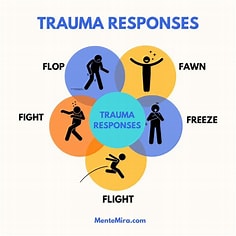
We have inherited nervous systems that automatically and instinctually react when faced with threat, pain or stress. While crucial for our survival, they can become maladaptive if the danger is not as big as we perceive it to be and if the reactions persist after the danger has passed. You’ve likely heard of the fight or flight response. Less well known are the freeze, faint/flop and fawn responses.

Fight
With the fight response you feel a surge of adrenaline, irritability, anger, and/or tension. You might become argumentative and have an urge to confront the perceived threat by lashing out verbally or physically. This can give us the illusion of power when we feel out of control, but it can strain our relationships.

Flight
With the flight response we feel an urge to avoid a threatening situation. You might avoid confrontation by seeking physical or emotional distance. You might feel anxious, restless, and experience social isolation.

Freeze
If we cannot fight or flee a threat, the freeze response is designed to help us to avoid detection from the predator or not feel its full impact if the danger is inevitable. You might feel suck, unable to move, dissociated or numb.

Faint/Flop
During the freeze response our vitals can drop so low that we faint. We more commonly experience flop with light-headedness, a sudden drop in energy or extreme fatigue. You might feel a sense of resignation, helplessness and hopelessness.

Fawn
This is experienced as people pleasing, compliance, putting other peoples’ needs above your own, conflict avoidance, difficulty saying no or setting boundaries, being afraid of abandonment or rejection. This can create a pattern of others taking advantage of you and result in a lack of self-worth, difficulty identifying your needs, repressed anger and physical tension.

These responses are automatic biological reactions, and we are all susceptible to them. We may experience all of them, or we may have tendencies for specific ones. If you can understand what is happening (in the moment or even later when you reflect upon it) you can have more compassion for yourself. If you or anyone you know need help to develop more adaptive coping mechanisms in the face of threat, pain or stress our team is available to help. You can reach us on the contact page of our website www.wellnessinmind.ca or by phone 514 223 5327 or by email info@wellnessinmind.ca.

Written by Shawna Atkins, Ph.D., OPQ., Psychologist

Have you got a case of shoulditis?

I often lightheartedly refer to my clients tendency to should themselves as a bad case of shoulditis. Karen Horney called it “The tyranny of the shoulds”. It refers to the pressure we feel to live up to an idealized version of ourselves, often drawn from what we think others expect from us. The “shoulds” are like little commands running through our narrative, telling us what to do or how to behave.

Shoulding fixates our attention on what we aren’t enough of, what we haven’t accomplished or what we don’t have. It comes with an implied promise that everything will be ok when we have or have done that thing we are shoulding ourselves with. But the relentlessness of the next should essentially robs us of feeling proud or grateful.

Regardless of any good ideas embedded in the should, and in how the frequency of its use creates the illusion of harmlessness – the pressure lights up networks in the brain that are associated with fear and vigilance. The cumulative assault of unrealistic expectation results in anxiety, self-doubt, feelings of inadequacy, shame, anger and chronic pain.

Having goals, even big ones are important for growth. They only become problematic when they are unrealistic. Expecting ourselves to grow quickly or according to some timeline will almost always come back to haunt us.

Here are some suggestions to help you reduce the use and impact of should in your life:
1) Get to know your strengths & values. What are you good at? What brings you joy? What is important to you?
Being clear about who you are will help you resist pressures to be anything more or different.
2) Consider any advice you receive through the lens of who you are. Let it go if it does not align with you.
3) Create explicit boundaries for people who pressure you. This can be difficult if your path is unconventional,
but it will get easier with practice.
4) Once you have decided that a should is aligned with who you are, replace “should” with “I want”.
5) Take time to savour and appreciate who you are and what you have to cultivate pride and gratitude.

If you have a bad case of shoulditis and need support to implement any of these suggestions, our therapists are accepting new clients. You can reach us on the contact page of our website www.wellnessinmind.ca , by phone 514 223 5327 or by email info@wellnessinmind.ca.
Wishing you wellness!

Instead of a deep breath, do this

How many times have you been told to take a deep breath? I used to say it to my clients when they were in distress until I learned about the physiology of breathing and the risks of overbreathing. We hear so much more about the importance of oxygen, but we hear very little about how important Carbon dioxide is for our ability to move the oxygen from the circulatory system into the organs and tissues that need it. Being told to take a deep breath, while intended to get you to invite the breath deeper into the body, often results in people taking in more oxygen than needed. When the balance between oxygen and carbon dioxide is disrupted, it compromises delivery of oxygen, blood flow, electrolyte balance, and our pH levels. This internal dysregulation can manifest itself in the following ways:

Muscle spasms, weakness or fatigue
Raynaud’s attacks
Asthma
Irritable bowel syndrome
Anxiety or panic
Hypertension
Emotion dysregulation
Heart arrythmias
Tension headaches or migraines
Chronic fatigue
Sleep apnea
Chronic pain
Attention & learning deficits.

If you suffer from any of the above symptoms and wonder if you are overbreathing, you can access the Nijmegen Dysfunctional Breathing Questionnaire online. It’s also safe to assume overbreathing if you mouth breathe, run out of breath while talking, tend to abort your exhalations, frequently sigh or yawn, if you have fast shallow breaths, if you hold your breath, or if you reverse breathe – which is when your belly moves in on the inhale instead of moving outward.

If you are overbreathing a lot of the time, especially if you have been doing so a long time, you may find it difficult to change the way you breathe. Given that effort can worsen overbreathing, it is important to begin with mindfulness of your breath. In mindfulness, we learn how to be in the present moment without judgment. Learning to breath mindfully will increase your awareness and acceptance of your breath patterns without struggling to change them. For people who have a history of asthma or panic attacks, it is important to begin slowly and to incrementally increase practice gradually.

Mindful Low and Slow breathing: Once mindful breathing is comfortably established, then we can introduce changes to the breath without exacerbating the problem. This involves bringing the breath lower in the abdomen, slowing down the rate of the breath, not emphasizing the depth or volume of the inhalation, and breathing out slowly and fully such that the exhale is slightly longer than the inhale. For any of you who find the exhale difficult, you may find it helpful to slow down the beginning of the exhale and to breathe out through pursed lips. If you are unsure how slow to go, 6 breaths per minute is a generally recommended. There are several free breathing apps available to guide you. Start slowly and gradually build the duration of your practice daily. Twenty minutes a day practice is the sweet spot to aim for.

So, when you hear someone tell you to take a deep breath, you can make the translation to low and slow breathing instead. We hope this and other blogs we write help you integrate practices to support your physical and mental health. If you need more support, our therapists are available. You can reach us on the contact page of our website www.wellnessinmind.ca or by phone 514 223 5327 or by email info@wellnessinmind.ca.
Wishing you wellness!
Written by Shawna Atkins, Ph.D., OPQ., Psychologist.

How listening can help your relationship [and five ways to improve it]

Much ink has been spilled on the importance of communication in romantic relationships. For instance, the benefits of using “I statements”, the importance of talking about one’s feelings, or trying to avoid using accusing or criticizing language. All of the above are positive, and I promote their use wholeheartedly. But there is, however, a subtler element to communication that does not seem to benefit from as much attention. An ingredient so important that without it, ‘communication’ would simply be ‘speaking’. The key element is listening.

At first glance, listening appears rather simple, and we all do it, right? Sit back, relax, and just hear the words exiting your partner’s mouth. But such a description would likely suit ‘hearing’ better than listening. In reality, listening is more complex, and certainly more challenging. But the good news is that knowledge and practice can lead to a significant improvement in our ability to truly tune into one another, and the payoffs are plentiful.

Listening entails much more than merely hearing a partner’s spoken words. In a 2003 study on communication in relationships, researcher Faye Doell drew attention to a key distinction, namely the difference between listening to understand and listening to respond, concluding that the former led to greater relationship satisfaction. And this distinction highlights one of the central elements of listening: understanding. Here are five strategies to help you along in your quest to become better listeners and as a result, most likely better partners, (and while you’re at it, better parents, family members and friends…)

Don’t make it about you. How many times are we engaged in conversations and all we want to do is give our opinion? Fix things? Defend ourselves? Listening is mainly about the other. It is about putting your needs, your opinions, your hurts aside temporarily and creating space and attention for the other to speak, to laugh, to cry, to explore – to just be. By being supportive and encouraging of this space, we are creating safety and freedom for our partners, as if saying to them: “You can say and feel what you need to say and feel right now. I can create that space for you.” Putting your partner first can be hard, especially if what they’re talking about is triggering or hurtful. Keep in mind that you don’t need to agree with your partner, or even like what they have to say. But being in listening mode is not the time to share your side of the story. (Don’t worry, you’ll get your turn… see below.)

Tune into their world. If you need to, take the time to actively prepare yourself to tune into your partner’s world. This can look like a brief solo-pep talk, or even a grounding ritual that can help you clear out your own agenda and focus on the other. Immerse yourself in your partner, turning their words and non-verbals into a narrative of a movie or book of their experience.

Strive to understand. As the listener, your first responsibility is to try to understand the position or experience of the other. Therefore, if what you’re getting isn’t clear, then ask clarifying questions to get the full picture. Steer clear of judgment and opinion, (which tend to be more about you than about your partner) and instead focus more on expressing interest and curiosity. This is your partner after all – would you not want to acquire a greater understanding of what they’re experiencing? Learn more about what makes them tick? Discover how they’ve evolved? Beyond being supportive in listening, acquiring a more profound knowledge of your partner deepens intimacy – one of the greatest antidotes to relational strife.

Take turns. Take a few deep breaths if you need to, and keep in mind that it is crucial for both partners to get a shot at expressing themselves and be listened to. Your turn may not be in 5 minutes, it may not be until after your partner’s finished their part. In fact, if you don’t feel the need to share your part, you may not even need to take your turn… this time. But be sure to get your turn next time around, or when something comes up for you and you will feel the need to express yourself. It’s only fair that if you provide that support to your partner, that they return the favour. So hang tight.

Don’t try to fix. Validate instead. Although good intentions may underlie attempts to fix, it is best used when solicited, as fixing often overshadows a partner’s experience and fast-tracks the discussion to the solution stage. Bombarding the other with suggestions and recommendations may appear caring & helpful, but it can also be received as “how is it that you haven’t thought of this?” Ultimately, as social creatures, what we often need above all else is to be heard, to be held, and to know that we are not alone. And therefore, validating our partner’s experience can go very far in providing such supports.

When working with clients, it never ceases to amaze me how many relationships have benefitted by simply applying some of the techniques listed here. As discussed above, part of the reason for this is that we acquire a greater understanding of one another, which is extremely important. But there are two more critical benefits that listening provides, often hidden from view. For one, in itself, being listened to deeply is calming and it can act as a dependable stress-reliever. Second, and more importantly, recognizing that our partner can reliably listen to us and be there for us significantly improves trust, the granddaddy of all relationship needs. So much so that renowned couples’ clinician and researcher Dr. John Gottman reported that the most significant predictor of healthy long-term relationships is reflected by the feeling that “I can trust that you will be there for me if I need you”.

So go out there, get your partner. Sit them down and let them tell you about them.

If you and your partner believe you would benefit from improving your listening skills, or if your couple is experiencing other struggles affecting your relationship, our clinicians would be pleased to support you through this challenging time. Call us at 514 223 5327 or complete the form below to schedule an appointment.

Written by: Julien Elia, M.A., OPQ, Psychologist

Dyspareunia: Healing painful sex

Painful intercourse can be devastating for women and their relationship(s). It runs counter to our expectation of sex being pleasurable; aside from consensual BDSM sex, sex should not hurt. Physicians have only recently begun to take women’s pain during sex seriously. It had long been dismissed and framed as a sign of neurosis. Imagine being both in pain and belittled. Thankfully more and more medical professionals are recognizing the signs and symptoms of painful intercourse and are helping women to get proper treatment.

What exactly is pain during intercourse? There are several conditions under this umbrella (see our blog on Vaginismus for an overview of that condition). This blog focuses on Dyspareunia: persistent or recurrent genital pain that occurs just before, during or after intercourse. This pain can be triggered by the insertion of a tampon, finger, or penis, and intensify during thrusting. Burning, aching, or throbbing can also occur briefly or for several hours after insertion.

Dyspereunia can lead a woman to feel isolated, as oftentimes the condition is kept secret. The universal assumption is that sexual intercourse is supposed to be pleasurable, so sufferers tend to quickly question what is wrong with them. Is it in their head? In their vagina? Is it both? When something we expect to be normal and pleasurable is not, it is confusing. Dyspereunia almost always has a deteriorating effect on romantic/sexual relationships. Sadly, some men do not believe when a woman tells them that they are in pain. They think it is in their head, it will pass, or dismiss the idea altogether without any discussion or attempt at easing the pain.

It is true that sex can be painful, but it is also true that treatments exist that can reduce or eliminate it. Both physical and emotional components to dyspareunia need to be considered since pain involves both the body and the mind. Also, if one route of treatment does not bring much change in the pain, the other route is worth exploring. Oftentimes a combination of physical and emotional factors are associated with dyspareunia. This is because initial pain can lead to a cycle of fearing future pain, which makes it difficult to relax and can loop back to more pain. Starting out by consulting with your physician is a great way to identify the cause(s) of painful sex in order to set you on a tailored treatment plan. Causes can include:

– Not enough lubrication
– Injury trauma, or irritation to any part of the vagina
– Inflammation, infection, or skin condition
– Allergic reactions (e.g., to latex condoms)
– Medical conditions (e.g., endometriosis, irritable bowel syndrome, ovarian cysts)
– Prior surgeries in the genital area
– Psychological contributors (e.g., sexual trauma, stress, anxiety, depression, poor body image, fear of intimacy)
– Relationship problems

Once you have a better sense of the cause(s) of painful intercourse, treatment can include one or more of the following:

– Experimenting with sexual positions (e.g., to control the depth of thrusting, which can be painful)
– Improving communication with your romantic/sexual partner (what causes pleasure and what causes pain)
– Extending foreplay (30 to 45 minutes to avoid penetration before the woman is receptive, which causes pain; kissing, cuddling, whole-body massage, and oral sex before attempting penetration)
– Using artificial lubricant and avoiding medications that diminish lubrication
– Experimenting with sex toys, especially external ones (remaining sexual even without penetration, and regaining orgasm)
– Estrogen therapy (insufficient estrogen can cause lack of natural lubrication)
– Desensitization (gradually decreasing the fear of intercourse and relaxation exercises to relax the mind, body, and vagina)
– Counselling or sex therapy (changing the negative emotional response to sex that has built up; working on relationship issues that contribute to emotional pain, triggering physical/sexual pain; talking about what is happening and about your feelings; getting a better sense of what brings you each physical and sexual pleasure; broadening your concept of sex to include activities other than penetration; sensate-focus)

Having a solid grasp of causes and treatment options will help you and your partner to form a plan for how to deal with dyspareunia. Avoidance is not an option. Even when you experience painful intercourse, you do not want to give up on sex altogether. Remember that intercourse is no necessary for great sex. You can experience sexual pleasure from the hands, the tongue, toys, even feet. Keep communication open, set up optimal conditions, and and keep trying.

If you need support in taking charge of sexual pain, we can help you to better understand and deal with the problem as well as to decrease relationship distress. Reach out to us at 514-223-5327 and begin counselling with one of our experienced therapists.

Written by: Andrea Guschlbauer, Ph.D., OPQ., Psychologist

Don’t compare your insides to other people’s outsides

I came across this expression at a recent conference I attended and thought a catchy reminder of an essential truth. Each one of us is made of up of a unique combination of strengths and weaknesses. We all implicitly know this and yet so many of us forget that the people we idealize are struggling with their own stuff too. Do you tend to focus on your weaknesses? How do you treat yourself when you mess up?

So many of us are critical of ourselves when we make mistakes. What we do not always realize is that this criticism activates the threat response in our nervous system resulting in increased stress levels. Many of us think that the criticism will motivate us to change and while this might work some of the time, it most often results in discouragement. Imagine how small you have felt when berated – does this feeling give you the hutzpah to face challenges? Not likely. Whether we do it to ourselves or someone else does it to us, it has the same effect on our physiology (to varying degrees but the same nonetheless). Now imagine being encouraged and inspired – see the difference? We can all take on a little more from this vantage point. Self-acceptance has been shown to reduce stress and increase happiness. When we can accept our weaknesses, we are less hard on ourselves and we are more open for growth.

Change is hard so we need to find ways to build courage and not undermine it. Take some time to identify your strengths. Get help from people you trust if needed. This work alone can help you to have a more balanced perspective of yourself. It can also help you identify your assets when faced with a challenge. Recently my younger daughter was expressing her fear about not being as good at a new activity as other kids. Fortunately, we had previously identified two strengths of hers as learning new things and playfulness. We were able to discuss how she could apply these strengths in this new activity and we also intentionally recalled previous successes in these types of situations and how these strengths came through for her. She was much more confident walking into that new activity and she could replace her fear with excitement.

Do not be fooled into thinking that a positive approach cannot work. Many people I speak to about this cannot imagine change to happen at all for themselves if they are not hard on themselves. Remember that shame never accomplishes anything positive whether it comes from others or ourselves. It is very possible to keep growing and improving in this life while simultaneously accepting ourselves with our myriad of strengths and weaknesses.

Think about where to prioritize the allocation of your effort. If there are areas of weakness that you must work on, then think about how you can apply your strengths to make improvements in that area. However, it is much easier to grow from a place of strength than from an area of weakness. Many of us erroneously believe that we need to resolve all our weaknesses and be good at everything. This is an inefficient use of energy and we get much better results when we start with our strengths and then develop and expand from there. It is reasonable to conclude that there are some things you may never be good at and opt to delegate to others when faced with challenges that require those skills.

List your strengths in front of you and take some time to dream of how you might apply these in new ways in the different contexts and roles in your life. Identify times in your life when you have faced challenges to conjure up a deeper sense of these strengths inside of you. Then establish clear and actionable goals that pertain to areas you want to improve upon or develop and be sure to include how you will apply your strengths in this plan. Monitor this process in a journal to reflect upon your experience and to incrementally challenge yourself further.

A balanced view of your areas of strength and weakness and a clearer idea about what you want/need to improve upon can help you along the path of self-acceptance and personal growth. If you or anyone else you know needs help to figure out how to balance personal growth with self-acceptance, we are here to help. We can be reached at 514 223 5327.

Written by: Dr. Shawna Atkins, Ph.D., OPQ., Psychologist.

Post-Traumatic Growth

I am continuously impressed by how adversity can be so transformative for people. None of us are spared from hardship – loss, oppression, trauma – we all experience it in some form or another. Even when these adverse experiences turn our world upside down and even when it takes a long time to recover, these challenges are always an opportunity for growth.

Many of these experiences can result in a “crisis of meaning” in which the things that used to make sense to us no longer do. Through reflection and discussion with others, we can find our way through this dark period to a clarification and deeper connection with what is important to us. We become compelled to prioritize this new-found purpose.

These kinds of experiences wake us up to what we typically take for granted. They invite us to appreciate the simple things and feel grateful for what we have. They also inspire us to reflect on the life we have and how to live it the best we can.

Adversity reveals to us resources that we might not have recognized in ourselves. We end up finding out what we are capable of and this resilience can be applied to future challenges. It also becomes clear who your most cherished relationships are and the kindness bestowed upon you by them or even strangers can rejuvenate your faith in people.

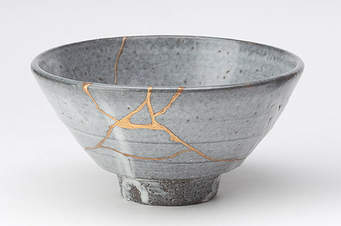
I often tell my clients about the beauty of kintsukuroi pottery. This is a Japanese tradition of taking broken vases and rebuilding them with either gold, silver or porcelain filing. The bowl becomes more beautiful for having been broken and both the fragility and resilience are essential components of its beauty.

As you cope with anything devastating, stress is inevitable. You may also experience flashbacks, agitation, depression and avoidance. Finding a way to accept what has happened will help you to begin to rebuild. The deliberate and constructive process of making meaning out of the suffering leads to a new sense of purpose in life. Putting the experience into words with a trusted friend or with a therapist can facilitate this process and move you toward building a life that is truly important to you.

If you or anyone you know would like help to move beyond trauma we are trained to help. We can be reached at 514 223 5327.

Written by: Dr. Shawna Atkins, Ph.D., OPQ, Psychologist

Visceral Memory

My daughter had her first day of school last week and she came home to recount how amazed she was that her fingers remembered her locker combination. She said she stood in front of it for a few minutes realizing that she could not remember it in her head but as she let her fingers move she was amazed at how her fingers knew what to do.

Has this ever happened to you? The body can express a memory that the mind cannot access. These aspects of our brain/body connection fascinate me and is one of the reasons that I became so interested in the brain and the nervous system. This is called visceral memory and while it is stored in the nervous system throughout the body, it is often experienced through our senses or emotions often without thoughts or words. Narrative memory – the kind of memory that is stored with words or stories happens (mostly) in the hippocampus of the brain. The hippocampus is very small and has much less storage capacity than the nervous system so we end up having many more visceral memories than we do narrative ones.

This comes up with clients frequently. They describe experiences where they felt something very intensely without any obvious connection to the current situation. Much of the time this can be innocuous or even pleasant but sometimes it can be disturbing. And if we do not understand what is happening, it can disturb us even more.

This is relevant for all us in that we typically underestimate how much previous experiences shape our perception of current situations. This can be why we take some things more personally than others and why others may react differently to an incident than we do.

Visceral memory is particularly relevant for anyone who has experienced a trauma because traumatic events are by nature against the grain of what is normal so they literally leave us speechless. Trauma also overwhelms the senses such that the body literally holds the score and then these feelings or sensations reappear in places that do not always make sense to us. These are like flashbacks but because they are experienced in the body, we call them “re-experiencing”. While the triggers can be subtle, if you look carefully, you can often identify them.

This is what we do in therapy. We help people understand their feelings and piece together a narrative that makes sense to them. We help them to monitor their emotions and the senses in the body and identify the elements in the current environment that may not be obvious at first but may have served as triggers for the visceral memory to have been activated. This act of sense-making can already provide relief since it reduces much of the confusion around them. But once we identify these, then we can heal the source of these traumas.

If you or anyone else you know need help to heal old wounds or traumas, our clinicians are trained to do so. You can reach us at 514 223 5327.

Written by: Dr. Shawna Atkins, PhD., OPQ, Psychologist

Watching porn: When does it become unhealthy?

Pornography has been around for ages. One of the first depictions of the naked body dates back about 25,000 years. Ancient Greeks and Romans left us relics of heterosexual sex, gay sex, oral sex, orgies and more. The famous Kama Sutra text was written sometime after 400 BC and is still widely popular. Even though porn seems to have always been around, it has remained taboo to a large extent. A lot of people like it, but we tend to be hush-hush about it. This can lead to wondering if the amount you watch (as well as the content) is normal. It can also contribute to misunderstandings between members of a couple if it is unclear who is watching what, how often, and why.

There is absolutely nothing wrong with watching porn if it is legal, consenting, involving adults and as long as it is used to enhance lovemaking with your partner(s). Porn use can become problematic though, when it is used to replace the real thing, when it sabotages the ability to enjoy ‘normal’ sex, and when it becomes addictive.

Porn is easy. The variety is stimulating, you can climax quickly, and you have endless access to daily fast sex. Porn is always there for you, it is never busy, and it lets you have sex on your terms. The ease in accessing porn certainly comes with these advantages, but you can become so used to watching a certain kind of porn that real sexual experiences become less stimulating. Maybe your partner does not match your favorite image, requires you to talk or include foreplay, or requires you to take their needs into account.

Porn promises ecstasy – it is often wilder than what you have been able to create in the bedroom. The thing is, pornography does not truly satisfy. If it did, you would not keep searching for more exciting content. Watching porn is comparable to lighting a match: it is exciting when it flares up but it extinguishes quickly. Real-life sex is more like a slow-burning fire that grows over time. It might not be exciting all the time but it tends to satisfy and fulfill more often than not.

Problems arise when your sexual energy is redirected from sex with your partner(s) to porn use. Viewing porn can create havoc on the arousal process in your brain and mess with your sex life. Prolonged use of porn over partner sex can lead to unreal expectations about sex, feeling ashamed, feeling distant from your partner(s), feeling unsatisfied with the real thing, and feeling perverted. If you have become used to watching perfectly shaped people performing wild sex acts, you might naturally run into trouble feeling aroused by your average looking, more reserved partner(s).

If you have found yourself relying on porn to satisfy your sexual needs to the detriment of your relationship(s), you might consider exploring if you have begun using pornography to cope with difficult feelings or situations. In the same way that people turn to alcohol, one can use porn to escape. Maybe you have been feeling lonely, stressed, bored, or emotionally disconnected. Rather than avoid or distract from painful emotions, you might try to understand and learn to tolerate them. See our blog on emotion regulation for tips on how to respond to situations that trigger intense or painful feelings. You might also choose to talk to your partner(s) about your sexual desires and things you want to try to build up sexual satisfaction in the bedroom. Porn can actually enhance partner sex by keeping things fresh and evolving if it is used as a mutual tool and not kept secret. You can use pornography to talk about sex more openly and finds ways to achieve mutual sexual satisfaction.

Porn is great as an alternate sexual outlet when your partner is unavailable or not in the mood. It can also be great for revitalizing things in the bedroom when they have become boring. But if you have found that you are turning to pornography in ways that interfere with real-life sex with your partner(s), consider speaking to a professional. We invite you to come individually or as a couple if you are having a hard time opening up the discussion of sex & incorporating porn. Call us at (514) 223-5327 to set up an appointment.

Written by: Andrea Guschlbauer, Ph.D.