Archives

Managing your Emotions

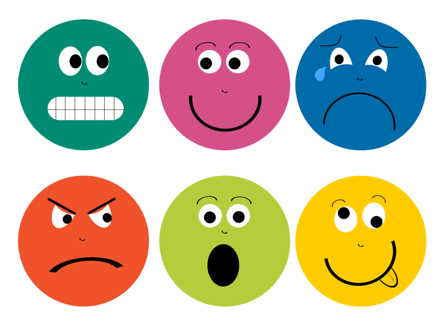
Generally, people try to increase the experience of pleasurable emotions such as joy, happiness, excitement, and hope and have a tendency to try to avoid or distract from painful emotions, such as anger, sadness, loss, and disappointment. However, part of being human is to experience a spectrum of emotions which ranges from pleasurable to painful without remaining stuck or overwhelmed in any one emotional state. When the painful emotions feel threatening or overwhelming to a person, it can seem safer to distract or numb the emotions by engaging in avoidant behaviors. These behaviors might include technology addiction, self-harming behaviors, alcohol and substance use, or overeating habits. In order to be able to tolerate our emotional experiences, we need to begin to understand our emotions first. Emotion regulation encompasses a set of skills which you can learn to use in order to increase your tolerance for emotional distress in moments where your anxieties, fears, and other painful emotions are amplified. The key to emotion regulation is developing the ability to be flexible in how you respond to situations that trigger intense or painful feelings.

1- Understanding Emotions: Learn to pause, step back, and reflect on your emotional experience in the moment to begin can to observe what has led to the change in your feelings. The purpose of becoming mindful in your observation is not to judge or change the emotions but to practice increasing awareness of the triggers which led to the emotional shift, the underlying thoughts /messages which you might be telling yourself about a given situation, and to begin to identify any physiological changes within your body associated with the feelings you are having.

2- Radical Acceptance: Part of developing distress tolerance involves learning to accept our emotions when they arise. When referring to “acceptance”, this does not mean “approval” of a situation that might be harmful or upsetting, nor does it mean that we like what is occurring. It simply means that we accept the situation, emotion, or experience as it is without trying to alter it or escape it.

3- Learning New Responses: Over time, we all tend to develop deeply ingrained reactions to situations that are stressful. One strategy to practice in order to develop healthier coping is to intentionally respond in a way that is the opposite of how you would typically respond. For example, if you are feeling angry at someone and you would typically raise your voice and confront the other person in the heat of the moment, then you would pause, take a deep breath, and mindfully respond in a soft or quiet voice instead. This will take time and practice as you begin to unlearn your old patterns of emotional reactivity.

4- Creating Positive Experiences: Actively focusing your thoughts on positive things in your life and establishing healthy lifestyle habits will enhance your ability to experience more positive emotions as well as to manage the more painful ones better. Engaging in activities that you enjoy and spending time with people you care about is one example of how you can increase opportunities for joyful moments. Eating well, exercising regularly, and practicing regular self-care such as cultivating gratitude also supports you in developing healthier coping strategies for your mind and your body.

If you or someone you know is struggling with managing their emotions and would like support in developing healthier coping skills, please call us at 514 223 5327.

Written by Marianne Chivi, M.A., C.O.

The Benefits of Laughter

I was at a conference recently in which the presenter cited a statistic that blew me away. Did you know that the average 4-year-old laughs 400 times a day and the average 40-year-old laughs 4 times a day? This means that too few adults are accessing the health benefits of laughter.

Laughter is one of the earliest forms of communication, it becomes available to the infant long before words do. It can be a very pure form of communication, and it certainly is up until we learn to fake it. But even though all of us are familiar with the hollow form that laughter can take, we also know the release that a genuine belly laugh can provide.

Laughter really is good medicine. Its effects include reducing stress hormones like cortisol and increasing the level of health-enhancing hormones and neurotransmitters. It also increases antibodies and it improves the work of T cells in the body which help us to fight viruses. It also reduces muscular tension, improves blood flow and lowers blood sugar levels.

Laughter also reduces stress and improves sleep. It is considered a prevention for depression and anxiety since it has such a positive effect on mood and brain functioning. It has also been shown to improve relationships and increases how much you attract others. And even though laughter tends to be accentuated when you share it with others, laughing on your own works just fine.

There are lots of ways to increase opportunities to laugh. Simply making the conscious effort to laugh more will help you. You might worry that it will seem strange at first, but it can easily build into genuine laughter with persistence. Select humorous books, radio shows or movies to get you going. Play with children, they are tremendous at finding the silly within the ordinary. Spend time with friends who tend to be funny or those who simply like to laugh. Intentionally look for the humor in life and start collecting a repertoire of funny memories to reflect upon to lift your spirits anytime you want or need.

See if you can find ways to incorporate more laughter throughout your day. It will make your days brighter and provide an antidote for the curveballs that life throws our way. If you or someone you know need help to build a happier life, we would be more than happy to help. You can reach us at 514 223 5327.

Written by: Shawna Atkins, Ph.D., OPQ.

Let’s Talk About Orgasms

Millions of women are frustrated by an inability to achieve orgasm. Historically, most men in North American society have learned to masturbate by the time they reach adolescence. Many women, on the other hand, have been led to believe that their genital area, sex, and sexual touch are taboo. As a result, countless women have not had an orgasm by the age of 18. Fortunately, attitudes have slowly shifted over time; today women are seen as needing and deserving sexual pleasure just like their male counterparts. There are now mental health clinicians specially trained to treat anorgasmia; they can identify and treat underlying causes, helping women to feel more sexually fulfilled.

The term “anorgasmia” refers to women who are unable to achieve orgasm even with ample sexual stimulation, often causing psychological distress. The most common causes for the condition include psychological, relationship, and cultural factors. Other conditions associated with anorgasmia include diseases affecting the human sexual response, gynecological surgeries, medications that interfere with orgasm, alcohol and smoking, and the aging process. Before pursuing counselling/sex therapy for anorgasmia, it is important to rule out a treatable underlying physical condition by seeing a gynecologist.

Counselling/sex therapy for anorgasmia focuses on three main areas: sex education, couple issues, and cognitive behavior therapy (CBT).

Sex Education
Women are taught about their sexual anatomy and physiology. This can include diagrams used in session as well as at-home self-examination exercises involving the use of a mirror. Women will also learn about how they like to be touched through at-home exploration of their bodies and self-stimulation/masturbation. Sometimes women have difficulty achieving orgasm because of insufficient sexual touch/stimulation. Not all women realize that stimulation of the clitoris is necessary to achieve orgasm. Altering sexual touch and sexual positions can increase the chance of clitoral stimulation and orgasm. Once women have a better understanding of their bodies and what they like, they can share this information with their partner(s), enhancing partner-sex and increasing the possibility of orgasm.

Couple issues
Relationship conflicts can affect a woman’s ability to orgasm. As such, anorgasmia is not to be viewed as the woman’s problem alone, rather as a couple issue. Counselling/sex therapy can help you to work through disagreements and tensions, which can improve sex. Couples are often taught the skill of effective communication. Not only can communication improve connection between partners, but it can also be used to enhance connection and satisfaction in the bedroom. For example, women can learn to properly communicate the forms of loving that turn them on. Couples are also likely to learn about sensate focus, which is a form of whole body massage that begins with non-genital touch and ends with genital sex. The goal is to teach couples to be more engaged in the sexual experience. Sensate focus allows for a shift in focus from orgasm to learning about how to touch and please each other. By removing the goal of orgasm, a woman who experiences anorgasmia is able to let go of anxiety and tension and thus increase her sexual satisfaction.

Cognitive Behavior Therapy
CBT is used to treat anorgasmia by focusing on changing negative thoughts and attitudes about sex. Examples of negative thoughts and attitudes include: I am not a good sexual partner, sex is dirty, and my body is unattractive. By challenging and modifying some of these unhelpful thoughts, women see a reduction in anxiety surrounding sex and are more likely to experience sexual satisfaction and have an orgasm. CBT for anorgasmia also focuses on addressing everyday stress, given that a stressed brain impedes the ability to let go and orgasm.

Although orgasm is not essential for satisfying sex, the ability to have one can be reassuring and satisfying. If you or someone you know is struggling with the inability to orgasm, rest assured that we are here to help. Call us at 514 223 5327 to set up an appointment with one of our clinicians.

Written by: Dr. Andrea Guschlbauer, Ph.D., OPQ.

Living the Life you Value

In a recent blog post, I mentioned the importance of hope being informed by values. Values are important guideposts for our lives, they point us in the right direction. Knowing what we value most in life is especially significant when faced with difficult decisions. When life is not directed by what we value, it starts to feel empty, unhappy and hopeless.

If you would like to clarify what your values are, read through the list below and pull out the values that stand out as important to you. If you are like most people, you will find that many of them look good. See if you can narrow it down to a list of 5 to 10 at the most. Then list these 5 – 10 in order of importance. To help you with this, take them two at a time and determine which you would choose if you could only satisfy one of them. Keep comparing each value with the next, until you have them in the correct order.

• Authenticity
• Achievement
• Adventure
• Authority
• Autonomy
• Balance
• Beauty
• Boldness
• Compassion
• Challenge
• Citizenship
• Community
• Competency
• Contribution
• Creativity
• Curiosity
• Determination
• Fairness
• Faith
• Fame
• Friendships
• Fun
• Growth
• Happiness
• Honesty
• Humor
• Influence
• Inner Harmony
• Justice
• Kindness
• Knowledge
• Leadership
• Learning
• Love
• Loyalty
• Meaningful Work
• Openness
• Optimism
• Peace
• Pleasure
• Poise
• Popularity
• Recognition
• Religion
• Reputation
• Respect
• Responsibility
• Security
• Self-Respect
• Service
• Spirituality
• Stability
• Success
• Status
• Trustworthiness
• Wealth
• Wisdom

Now think about your list. Does the way you live now reflect these values? Are there any of them that are not getting expressed? Which of them would you like to be living more of? These reflections may help you identify changes you can make to live a more fulfilling life.

Values tend to be stable over time but they can change. For example, we might prioritize money when we first start our career, and when family arrives, balance might become more important. You can repeat a values exercise like the one above as you enter different stages in your life or when you are feeling unbalanced.

Some of my clients do this exercise and discover that they have been living true to their values in many ways and this realization increases their appreciation for those aspects of their life. I hope this happens for you too. If it has not, I hope this exercise helps you to identify changes you can make to increase your life satisfaction. If you or someone you know needs help to chart a more fulfilling course, we are here to help. You can reach us at 514 223 5327.

Written by: Shawna Atkins, Ph.D., OPQ.

What is OCD?

I often hear people refer to themselves as OCD for the habits they like to repeat or for being a “control freak. OCD like many mental illnesses has a continuum to it. Whether we meet the criteria for a diagnosis depends of the number of symptoms we have and their intensity. This is why OCD and many other mental illnesses can be so misunderstood. Those of us who get uncomfortable without our comforting rituals but tolerate their absence often erroneously expect that others can tolerate this too. But someone with OCD cannot. They experience their symptoms in a much more intense and disruptive way. Their thoughts are unwanted, repetitive and persistent. The urges or images that intrusively dominate their mental energy are exhausting and cause a tremendous amount of distress.

OCD is an anxiety disorder. It is a combination of intrusive obsessions and compulsive behaviors. Some people have just the obsessions, and some have both the obsessions and the compulsions. The obsessions are unwanted and it can come in the form of repetitive thoughts, urges, or images that don’t go away. They have a phobic and superstitious quality to them and they cause a tremendous amount of anxiety. As these thoughts preoccupy the mind they build in their intensity making it extremely difficult to focus on other things. Certain behaviours are discovered that seem to take the edge off this anxiety such that the person who has OCD begins to engage in them compulsively. These compulsions increase in frequency gradually over time until they begin to interfere with daily activities. There is a vicious circuity from the anxiety to the obsessions to the compulsions in that there is a habituation to the relief following the compulsions. The intensity and duration of the relief goes down with time such that the compulsive behaviors need to be done more frequently to feel the same level of relief. Thus, the circle gets smaller and smaller as the frequency of the compulsive behaviors increase.

Compulsions may be behaviours like washing, cleaning, or ordering things in a certain way. Some are less obvious, for example some people may count things or repeat phrases in their mind. People who experience OCD usually know that obsessions and compulsions don’t make sense, but they still feel like they can’t control them. Many feel ashamed of their symptoms and struggle to ask for help.

It is estimated that 1.8% of Canadians between the ages of 15 and 64 suffer with OCD. It is equally prevalent among men and women from every background, race and ethnicity. For one third of these people, the symptoms began during childhood. It tends to be chronic with the symptoms either increasing or abating relative to the stressors that are present for the individual.

The good news is that OCD is treatable. A therapist can help to figure out and understand the patterns between your emotions, thoughts and behaviors. They can help you to learn more effective ways to regulate the anxiety and gradual exposure and response prevention can be used to stop the compulsions.

If you or someone you know needs help to recover from OCD, give us a call at 514 223 5327.

Written by: Shawna Atkins, Ph.D., OPQ.

Older Adults Can Have Sex!

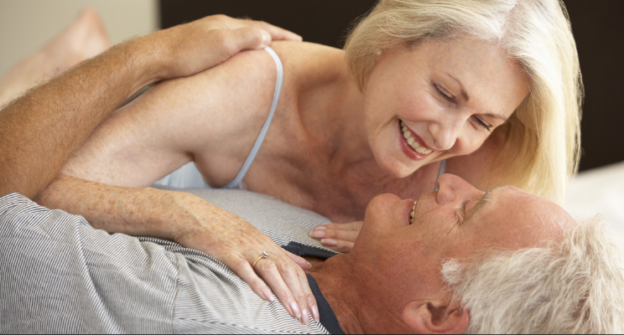
There is a popular misconception that with aging comes the end of sex. Somehow, we equate reaching a certain age (some say as early 50, others as late as 70) as a death sentence for sexuality. Apparently, there is a cutoff point at which we cease being sexual beings. Some people fall prey to society’s views and dismiss sex; that was something they engaged in during their younger years and it is no longer a part of their present. Others feel weird that they still have interest in something that has become taboo and is not talked about. Yet others find themselves in a relationship where sex has become a dividing factor; one wants to continue having sexual intimacy as part of the couple while the other has shelved it. I want to let you in on a secret: sex does not have to stop at a certain age, rather the way you have sex changes.

Bodies change with age, affecting what happens in the bedroom. For women, there is a decline in vaginal lubrication, which can make sex uncomfortable. The vaginal lining thins, adding to discomfort. Lubrication can help, but not necessarily. For men, it takes longer to get aroused, and there is a need for more direct touching (i.e., they cannot rely on fantasizing alone). Erections become less firm and slower to rise. Even if erections are not an issue, older men often find that minor distractions result in a loss of rigidity. For both men and women, medical conditions begin to either limit sexual activity or medications used to treat them bring negative side effects that affect sex.

If we assume that good sex necessities natural lubrication, firm lasting erections, and perfect health, we can see why the assumption that aging and sex do not mix exists. That is, if we assume that sex means penis-vagina penetration. Here is the thing: you can have deeply satisfying sex without the “in-and-out”. You can move away from penetrative intercourse to sex that involves kissing, hands, mouths, cuddling, sex toys, and whole body massage.

Retiring from being sexual partners decreases intimacy and disregards a basic human need for touch. Using your hands, your mouth, and sex toys allows you to continue to reap the many benefits of sex, including orgasm. The results of aging can actually enhance sexual experiences. Typical gender conflicts now reverse and become a source of synchronicity. For example, women tend to value emotional closeness while men highly value sexual closeness. With age, women continue to appreciate emotional intimacy but they also put importance on sexual intimacy. They care about sex; frequency, duration, and orgasm. At the same time, men seem to increase their regard for emotional closeness. Women who tend to enjoy extended foreplay now find that men are more willing to slow down and engage. Given that men now benefit more from direct touch, they learn to welcome the foreplay that their partner has always enjoyed. “Outercourse” (whole body massage) can become flirty, playful, and deeply sexually satisfying. Lovemaking moves from erections and penetration to a wider whole body experience.

Change is challenging for most people, including changes in how to have sex. However, older couples can choose to help each other transition from what used to work sexually to something new and possibly even more enjoyable. They might discover a deeper connection that is rich in eroticism, bringing them closer and feeling more in love. The choice is yours: you can decide that sex is over, or you can choose to accommodate and continue to enjoy lovemaking. You might be surprised to find out that “old age sex” is fantastic, maybe even the best sex of your life.

We hope that these ideas help you to adjust to the sexual changes that come along with aging. If you or someone you know needs assistance with the transition, we would be pleased to help. You can reach us at 514-223-5327.

Written by: Dr. Andrea Guschlbauer, Ph.D., OPQ.

Should I Stay or Should I Go?

Many people find themselves questioning their relationship and wondering if it is time to call it quits in hopes of a more fulfilling future. Maybe your relationship has not fully failed, but it flounders in the realm of “not great”. Clients often ask me, “Should I stay or should I go?” Deciding whether to leave a relationship is a deeply personal choice. Ultimately only you can decide what to do, but counselling can be a place to sort out this profound decision.

The truth is, many relationships should end. Sometimes even “good people” simply cannot resolve their relationship issues no matter how much and for how long they try. If you have tried your best and the relationship is still not working, you need not blame yourself; rather you might use what you have learned to better future relationships.

On the flip side, some relationships can be repaired. If you are both willing to do all you can; to look deeply at why things went wrong and you are willing to invest the effort, then there is hope.

You can stay, you can go… or as a third alternative: you can remain on the fence. This is the least helpful option. When you are stuck in limbo and ambivalence, you are by default not committing to making efforts to improve. Nor are you putting in any action to begin the process of leaving and healing, of living a new life. It’s better to choose a side of the fence than to stay on it.

How do you decide what to do when you experience ambivalence about your relationship?

Here are some things to think about if you are questioning your relationship:

1. Ask yourself if you are willing to cultivate the following essentials

Trust
• Honesty
• A sense of safety
• Communication
• Shared interests
• Commitment
• Self-and-partner esteem
• Respect
• Common goals

2. Carefully explore the following considerations:

Have small irritations become so frequent that they are no longer tolerable?
Not-good interactions outnumber good interactions and resentment has surpassed a workable point. Neither of you is willing to make changes to your upsetting behaviors and you can no longer tolerate each other if these behaviors remain.

Are your needs and desires so different that there is no room for compromise or change?
For example, different sex drives, dreams, values, or relationship expectations; different views on finances, children, or place to live. There is a need you cannot live without or you are unwilling to compromise the need.

Are there too many external stressors in your life?
Too many stressors can surpass a couple’s ability to cope. For example, work demands, major illness, accidents, family or origin needs, or financial instability. Stress can reach a point of eroding even deeply committed relationship; sometimes too much is too much.

Does your relationship lack depth?
Your connection has become shallow, predictable, and ritualistic, requiring little to no effort. Such a scenario can leave you susceptible to seeking intriguing experiences outside of the relationship.

Is your relationship characterized by boredom?
You’ve stopped discovering each other. You take each other for granted and have lost interest in continued growth. There is a lack of excitement, surprises, challenges, and passion. Similar to a lack of depth, boredom can tempt you to find ways to feel alive outside of the relationship.

Are you investing too much outside of the relationship?
For example, investing in social engagements, substances, sporting activities, excessive work commitments, etc., to the detriment of the relationship. Your outside priorities drain energy from the couple; your escapes have become more important than your relationship.

Do misunderstandings and misassumptions outnumber mutual understanding?
You no longer listen to each other, you have lost interest in each other, and you no longer attempt to resolve disagreements. Rather than put in work, you ignore the problems.

The above questions and considerations can help you come to a decision on whether your relationship issues are workable or not, and if you want to stay in the relationship. An additional consideration that is often forgotten is how you feel in your body. What is your body telling you? Your body can inform you about your level of stress or other emotions that are not always registered in our mind. Pay attention to your body’s reaction when you ponder whether to stay and whether to go. Notice the feelings that arise, such as tension/tightness versus relaxation/release.

When it comes down to it, nobody but you can decide whether you should stay or go. Consider the points above, ask yourself tough questions, and consider counseling. Work through the ambivalence to determine changes that can benefit both you, your partner, and your loved ones (especially children). You do not have to stay in an unhappy relationship. If you conclude that you and your partner cannot be happy together, consider ending it. You will do yourself a favor and may even avoid something worse, like cheating. If you conclude that you are happiest in a relationship together, then put in the hard work to repair the things that got you in a place of doubt.

If you need help resolving your ambivalence, we can help you come to a decision. Give us a call at 514-223-5327 and ask to set up an appointment with one of our couples counseling specialists.

Written by: Dr. Andrea Guschlbauer, Ph.D., OPQ.

Converting False Hope into Real Hope

We hope that our recent blog on hope has provided ideas for you to practice building hope for yourself and your loved ones since it has such a powerful impact on how we experience our lives.

You have probably heard of the expression “false hope” and many of us have experienced the ups and downs that the roller coaster of false hopes creates. Hoping for the raise, the grade, for someone to notice us… Sometimes these hopes come true and they make us happy for awhile, but when they don’t we fall prey to despair. This version of hope takes a toll on our health and our well being.

One of the ways to find out if your hopes are false is if they are based in fear, as though you will not be ok if they do not materialize. False hope is narrow and grasping. It comes from poverty, as though we lack something. It is when we cling to things needing to be a certain way. And false hope tends to be kind of magical and passive.
Does this sound familiar at all?

We help our clients become aware of the pitfalls of false hope and we help them redefine their hopes into something more substantial such that they correspond to their values to ensure that they are meaningful and important to them. Even false hopes have a foundation that is open to possibility. Our hopes may have gotten narrow from fear, but with a little probing, they can unfold into something broader and more attainable. For example, we might hope to come into some money and with this we might fantasize about winning the lottery or inheriting from a relative. At the root of this hope may be the value of financial security and when we bring this to light we can explore realistic ways to achieve this.

To transform our hopes from false to real, we need to explore what really matters to us. If you do not already have a clear sense of what this may be for you, take a value exercise to help you clarify what is important to you. Then examine how much the way you are living now resonates with these values. The extent that these are discrepant predicts hopelessness and it will give you an idea about how much work needs to be done.

Once hopes are grounded in values as opposed to fear, they have more breadth. We can more easily identify several pathways to realize them in our lives. Acting on these varied ways to make our hopes come true is crucial so be sure to get going on whatever action plans you identify.

If you or anyone you know need help to build meaningful hope in your life, we can help. You can reach us at 514 223 5327 to schedule an appointment with one of our clinicians.

Written by: Shawna Atkins, Ph.D., OPQ, Psychologist

Building Hope

I have been reading Rick Snyder’s work on hope lately. He was one of the pioneers of hope theory research and positive psychology. He defines hope as having two components that he referred to as pathways and agency. Pathways being the capacity to come up with routes to desired goals, and agency being the will or motivation to use these routes. These essentially correspond to the “will” and the “way” of the old adage “where there’s a will there’s a way.”

There are reliable and valid measures of hope and there has been plenty of research correlating high scores on these hope scales to factors such as happiness, health, pain tolerance, and both athletic and academic success. Hope is a sense of potential. With it, we have more resilience in the face of challenges. The sense of possibility that hope provides naturally inspires the allocation of energy toward the things we want. This is why people with hope tend to eat more fruits and vegetables, practice safer sex, and exercise regularly.

Without hope, things are bad and we feel like they are never going to get better. This hopelessness is at the crux of depression and suicide.

If you would like to see how you fare on hope, use the scale shown below and choose the number that best describes you in response to the following eight statements. Definitely False (1), Mostly False (2), Somewhat False (3), Slightly False (4), Slightly True (5), Somewhat True (6), Mostly True (7), Definitely True (8).

1. I can think of many ways to get out of a jam. ____
2. I energetically pursue my goals. ____
3. There are lots of ways around any problem. ____
4. I can think of many ways to get the things in life that are most important to me. ____
5. Even when others get discouraged, I know I can find a way to solve the problem. ____
6. My past experiences have prepared me well for my future. ____
7. I’ve been pretty successful in life. ____
8. I meet the goals that I set for myself. ____

Scores can range from a low of 8 to a high of 64.

The good news is that hope can be learned. If you would like to increase hope for yourself try these strategies.

1) Make goals that correspond to your values to ensure that they are meaningful and important to you (and not what others want for you).
2) Determine the best pathway that can be broken down into steps. Start with the first step and then the next, and so on.
3) Consider the challenges you will face along the way and develop a game-plan to manage these as successfully as possible.
4) If your goals require learning new skills, then give yourself the time to do so.
5) When you stumble, use this as information to help you figure out a more effective path.
6) Encourage yourself with positive thinking (“I can do this”) and rely on your previous successes to inspire faith in your abilities.

Try taking the hope scale then give yourself a few months to practice these strategies and then take the quiz again. If you would rather talk about building hope with one of our clinicians, you can reach us at 514 223 5327.

Written by: Shawna Atkins, Ph.D., Psychologist

4 Days to a Better You

You have probably heard that keeping a journal can be good for you. There is something about writing that helps us to become more clear about our priorities and to understand our emotional reactions. We used to think that emotional expression was the important element. For example, we know that people who talk about their difficult experiences have better immune functioning than those who do not. However, more recent research has emphasized that making sense of our experiences is more crucial than emotional release. There is something about either talking or writing about our experiences that helps us to better understand them.

A researcher named Laura King from the University of Missouri was interested to find out if the benefits of writing were limited to writing about difficult experiences. She found that thinking seriously about an important topic was essential, but the emotional anguish was not. Here is what she did:

She asked people to write about their best possible future self for 20 minutes for four consecutive days. She measured mood and health before, immediately after, three weeks later and again five months later. She found that people who did this exercise felt less upset, happier, and got sick less often.

If you would like to try this experiment, find a quiet place to think about your life in the future. Imagine that everything has gone as well as it possibly could. You have worked hard and succeeded at accomplishing all your life goals. Think of this as the realization of all your life dreams. Now, write about what you imagined for 20 minutes. Do this for 4 consecutive days.

We encourage you to start a journal to help you express and understand yourself. If you incorporate the best possible future self exercise, we hope it boosts your feelings of happiness and immunity. If you would rather talk face to face with one of our clinicians, you can reach us at 514 223 5327.

Written by: Shawna Atkins, Psychologist